Business Card Embossing & Debossing: The Do's and Don'ts for a Premium First Impression

In a world where digital communication dominates, a well-crafted business card still carries remarkable power. One of the most effective ways to make a business card memorable is through embossing and debossing—special finishing techniques that add texture, depth, and sophistication.
Whether you're a luxury brand, consultant, property agent, designer, or premium service provider, understanding the right way to use these techniques can elevate your brand image significantly.
What is Embossing?
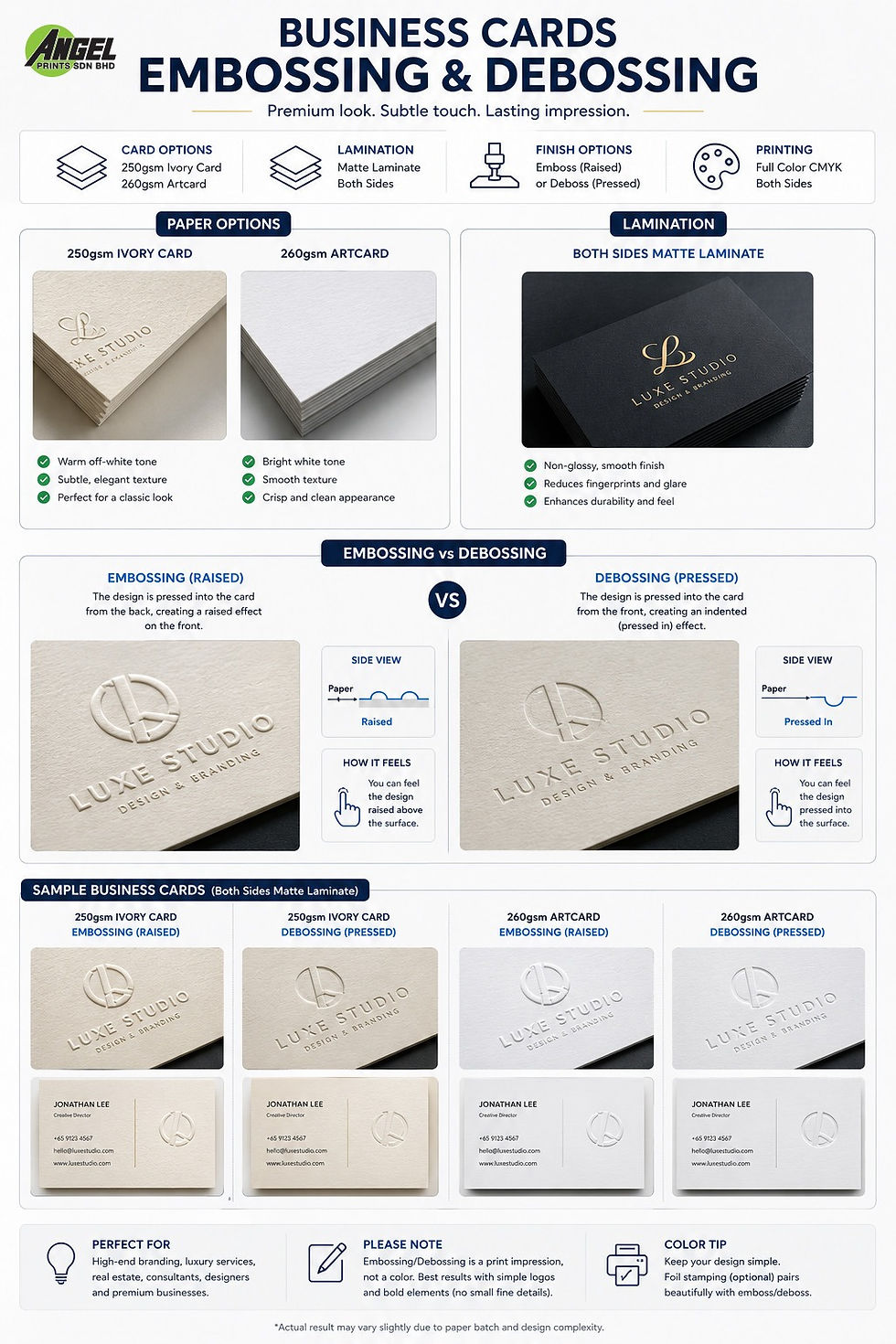
Embossing creates a raised effect on the surface of the card. The design is pressed from the back of the paper, causing selected elements such as logos, names, or icons to stand out above the surface.
Benefits of Embossing
Creates a tactile, premium feel.
Makes logos and brand marks more memorable.
Enhances the perception of quality and professionalism.
Works exceptionally well with luxury branding.
What is Debossing?
Debossing creates a pressed-in or recessed effect. The design is pressed into the paper from the front, creating an elegant indentation.
Benefits of Debossing
Offers a subtle and sophisticated appearance.
Creates depth without being overly bold.
Provides a premium tactile experience.
Perfect for minimalist and modern branding.
Choosing the Right Paper
The quality of the paper plays a crucial role in achieving the best embossing or debossing results.
250gsm Ivory Card
Warm off-white appearance.
Elegant textured surface.
Ideal for classic, luxury, and traditional brands.
Provides excellent depth for embossing and debossing effects.
260gsm Artcard
Bright white appearance.
Smooth and clean surface.
Suitable for modern corporate designs.
Produces crisp and sharp impressions.
Why Matte Lamination Matters
Both sides matte lamination is highly recommended when producing embossed or debossed business cards.
Advantages
Smooth, non-glossy finish.
Reduces fingerprints and glare.
Improves durability.
Enhances the premium tactile experience.
The DO's of Embossing and Debossing
1. Keep Your Design Simple
Simple logos, icons, and typography produce the cleanest impressions.
Good Examples:
Company logos
Initials or monograms
Brand symbols
Simple geometric patterns
2. Use Bold Elements
Embossing and debossing work best when the design contains sufficient thickness.
Recommended:
Medium to bold fonts
Strong line artwork
Clear shapes and symbols
3. Focus on Key Branding Elements
Highlight important elements rather than embossing the entire card.
Best Choices:
Company logo
Business name
Brand emblem
Signature design feature
4. Pair with Matte Lamination
Matte lamination complements embossing and debossing beautifully by enhancing both visual and tactile appeal.
5. Match the Technique to Your Brand
Embossing: Luxury, premium, prestigious brands.
Debossing: Minimalist, modern, sophisticated brands.
The DON'Ts of Embossing and Debossing
1. Don't Use Very Small Text
Tiny fonts often lose clarity when embossed or debossed.
Avoid:
Fine print
Small contact details
Thin decorative fonts
2. Don't Include Excessive Fine Details
Complex artwork can result in unclear impressions.
Avoid:
Intricate illustrations
Very thin lines
Highly detailed patterns
3. Don't Overcrowd the Card
Too many embossed or debossed elements can make the card look cluttered and reduce the impact of the finishing.
Less is often more.
4. Don't Rely on Embossing or Debossing for Readability
These finishes are designed to create texture and visual appeal, not to replace clear printing.
Always ensure:
Contact information remains easy to read.
Critical details are properly printed.
5. Do Not Emboss or Deboss on top of fonts
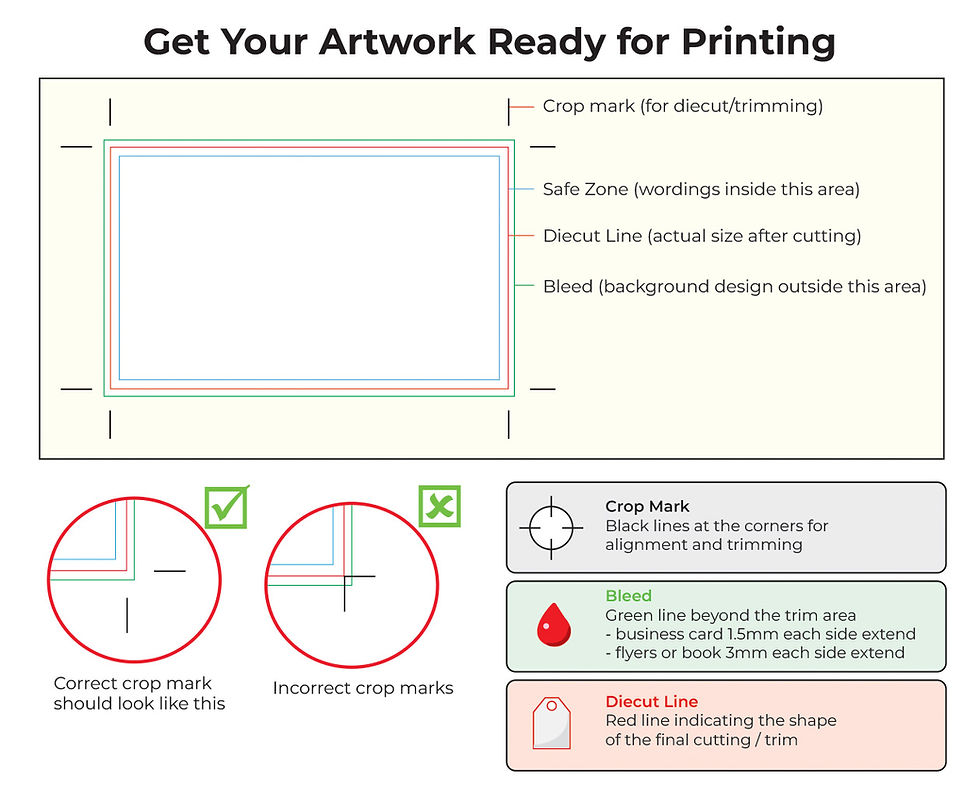
When the machine running to emboss or deboss the fonts, there will be allowance of 0.05mm to 0.5mm the effects will run. Therefore it will ruin your final artworks for the effects. It is recommended to use such effects on non-printed area.
6. Don't Forget Paper Selection
Using unsuitable paper stock can reduce the quality of the impression. Choose quality cardstock that can properly support the pressure required during production.
Which One Should You Choose?
Embossing | Debossing |
Raised effect | Pressed-in effect |
More noticeable | More subtle |
Luxury and premium appearance | Elegant and minimalist appearance |
Strong tactile experience | Sophisticated tactile experience |
Ideal for logos and branding | Ideal for modern and understated designs |
Final Thoughts
Embossing and debossing are among the most effective finishing techniques for creating premium business cards. When combined with quality cardstock and matte lamination, they transform an ordinary card into a memorable branding tool.
The key to success is simple: keep the design clean, focus on important branding elements, and avoid excessive detail. When executed correctly, embossing and debossing communicate professionalism, quality, and attention to detail long before a conversation even begins.
A business card is often your first physical impression — make sure it leaves a lasting one.


Comments